Boko Haram and Military Operations: A Plain-Language Explainer
By Tunde Adebayo · Published · 4 min read
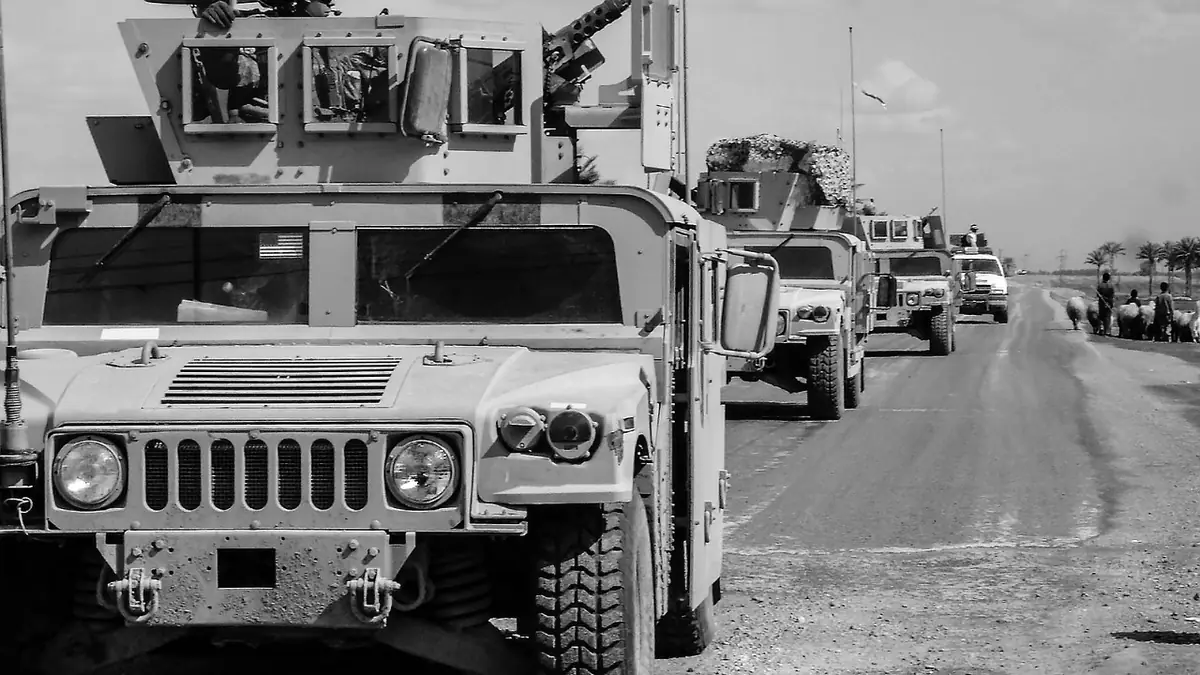
News about Boko Haram and military operations in Nigeria is often heavy with jargon: 'sectors of operation', 'clearance operations', 'improvised explosive devices', 'factional splinters'. For the average reader, it can be hard to tell what is a significant development and what is routine language.
This explainer breaks down the key terms and concepts so you can follow security news with a clearer eye. It covers the main groups, how the military structures its response, common tactics, and what the numbers in reports actually mean.
Who Is Boko Haram? A Quick Primer
Boko Haram is a jihadist insurgent group that emerged in north-eastern Nigeria around 2002, founded by Mohammed Yusuf. The group's official name is Jama'atu Ahlis Sunna Lidda'awati wal-Jihad, which roughly translates to 'People Committed to the Propagation of the Prophet's Teachings and Jihad'. It opposes Western education and seeks to establish an Islamic state. In 2009, a major uprising led to the death of Yusuf in police custody and a violent crackdown that pushed the group underground.
After 2009, the group regrouped under Abubakar Shekau and launched a sustained insurgency from 2010 onwards, targeting schools, churches, mosques, markets, and military installations. In 2015, it pledged allegiance to ISIS and rebranded as Islamic State West Africa Province (ISWAP), though internal splits followed. Today, the term 'Boko Haram' is often used loosely to refer to the broader insurgency, but there are distinct factions with different tactics and areas of operation.
- Founded in 2002 in Maiduguri, Borno State.
- Opposes Western education and seeks an Islamic state.
- Pledged allegiance to ISIS in 2015, leading to the ISWAP name.
- Split into factions, notably Shekau's group and ISWAP.
Key Factions and Groups
The insurgency is not monolithic. The main factions are Jama'atu Ahlis Sunna Lidda'awati wal-Jihad (JAS), often called Shekau faction, and Islamic State West Africa Province (ISWAP). JAS was led by Abubakar Shekau until his death in 2021, and it is known for indiscriminate violence, including suicide bombings and attacks on civilian targets. ISWAP, on the other hand, has focused on military targets and has sought to govern territory in a more structured way, though it also commits abuses.
Another group, Ansaru, is a smaller al-Qaeda-aligned faction that has kidnapped foreigners and conducted targeted attacks. In the Lake Chad Basin, there are also criminal gangs and bandit groups that sometimes collaborate with or mimic insurgents. When reading news, pay attention to which group is named; it affects the context of the attack and the likely response.
- JAS (Shekau faction): indiscriminate attacks, suicide bombings.
- ISWAP: targets military, seeks territorial control.
- Ansaru: al-Qaeda-aligned, kidnapping and targeted attacks.
- Bandit groups: criminal, sometimes overlap with insurgents.
| Term | Meaning | Who Uses It |
|---|---|---|
| Neutralised | Killed | Military |
| Soft target | Civilian location with little protection | Media, analysts |
| Sector | Geographic command area | Military |
| IED | Improvised explosive device | Media, military |
| Clearance operation | Military sweep to remove insurgents | Military |
| ISWAP | Islamic State West Africa Province | Media, analysts |
How the Nigerian Military Structures Its Operations
The Nigerian military conducts counter-insurgency through joint task forces, primarily Operation Hadin Kai (formerly Operation Lafiya Dole) in the North East. The theatre is divided into sectors, each with a headquarters and responsibility for a specific area. You will often see references to 'Sector 1', 'Sector 2', and so on, in reports. These are geographic commands that coordinate army, navy, air force, and police units.
The military also uses 'super camps' – fortified bases from which troops launch patrols and operations. The Air Force provides close air support and conducts reconnaissance. The Multinational Joint Task Force (MNJTF), comprising troops from Nigeria, Niger, Chad, Cameroon, and Benin, operates in the Lake Chad Basin. Understanding these structures helps you interpret claims about 'troops neutralised' or 'sectors repelled attacks'.
- Operation Hadin Kai: main counter-insurgency operation in the North East.
- Sectors: geographic commands within the theatre of operation.
- Super camps: fortified bases for troop deployment.
- MNJTF: multinational force in the Lake Chad Basin.
Common Tactics and Terms
Insurgents use improvised explosive devices (IEDs), suicide bombings (often by women and children), ambushes, and hit-and-run attacks. They also engage in kidnapping for ransom and forced recruitment. The military responds with clearance operations, cordon-and-search, and airstrikes. Terms like 'neutralised' usually mean killed; 'repelled' means the attack was stopped; 'troops came under fire' indicates an ambush.
Other terms you will encounter include 'soft targets' (civilian locations like markets and places of worship), 'hard targets' (military installations), and 'fleeing insurgents' (those escaping after an attack). When a report says 'no casualties on our side', it often means military casualties, not civilian. Being aware of these euphemisms can help you read between the lines.
- IED: improvised explosive device, often used in roadside bombs.
- Neutralised: killed (used by military).
- Soft targets: civilian and unprotected locations.
- Clearance operations: military sweeps to remove insurgents.
Reading Numbers and Claims Critically
Both the military and insurgents have incentives to exaggerate. The military may inflate enemy casualties and downplay its own losses, while insurgents claim larger attacks than they actually carried out. Independent verification is difficult in conflict zones. Look for consistency across multiple sources and be wary of single-source claims. Also, note the difference between 'casualties' (which includes killed and wounded) and 'fatalities' (deaths only).
When numbers are given, consider who is providing them. Military spokespeople often release statements with precise figures that may not be independently confirmed. Humanitarian organizations and local officials may give different counts. For major incidents, international monitors or journalists may later provide more reliable estimates. A good rule is to treat initial figures as provisional and look for follow-up reporting.
- Be sceptical of precise numbers from either side.
- Check if sources are military, civilian, or independent.
- Distinguish between casualties and fatalities.
- Follow-up reports often revise initial figures.
The Human Cost and Displacement
The conflict has killed tens of thousands of people and displaced over two million in the Lake Chad Basin, according to UN estimates. Many live in internally displaced persons (IDP) camps, where they face food insecurity, disease, and limited access to education. The destruction of livelihoods has pushed many into poverty. The humanitarian response is led by the UN and international NGOs, often with security escorts.
When reading about military operations, it's easy to focus on the tactical details and forget the civilian toll. Reports of 'clearance operations' may not mention the displacement they cause. Similarly, insurgent attacks on markets or schools have long-term effects on communities. Keeping the humanitarian dimension in mind gives a fuller picture of what the news means for ordinary Nigerians.
- Over 2 million displaced in the Lake Chad Basin.
- IDP camps face overcrowding and food shortages.
- Civilian casualties often underreported.
- Humanitarian access is constrained by insecurity.
- Boko Haram is not a single group; factions like ISWAP and Ansaru have different tactics and targets.
- Military operations are structured under Operation Hadin Kai, with sectors and super camps.
- Terms like 'neutralised' and 'soft target' are euphemisms that can obscure the reality of violence.
- Numbers from both sides should be treated with caution; independent verification is often lacking.
Tunde has spent years following Nigerian current affairs, from power sector updates to campus news. He focuses on turning fast-moving reports into clear, verifiable explanations for everyday readers. He leads editorial checks at LoadedBaze.